WordPress Setup & Website Building: WordPress Setup Guide for Building a Professional Website
WordPress Setup & Website Building: WordPress Setup & Website Building: Build a Stronger Website with WordPress
A professional website is more than an attractive collection of pages. It is a practical business asset that builds credibility, communicates value, attracts the right visitors, and makes it easier for people to take action. WordPress Setup & Website Building provides a structured path from an initial idea to a reliable, engaging, and manageable online presence. Whether you are launching a company, refreshing an outdated website, creating a personal brand, or developing an online store, careful planning and sound implementation can make the difference between a website that merely exists and one that performs.
This service is designed to remove technical confusion and give your project a clear foundation. It combines strategic planning, WordPress installation, visual customization, content organization, responsive design, performance preparation, and essential security practices. The result is a website that represents your goals while remaining flexible enough to grow with your audience.
A well-built WordPress website should be easy to navigate, quick to load, comfortable to use on mobile devices, and simple for authorized administrators to update. It should also guide visitors naturally toward meaningful actions, such as requesting a quotation, booking an appointment, joining a mailing list, purchasing a product, or contacting your team. The process therefore focuses not only on appearance, but also on usability, conversion, accessibility, and long-term maintainability.
What the Service Includes
Discovery and Project Planning
Every successful website begins with understanding. Before technical work starts, the project is shaped around your objectives, audience, offerings, competitors, and preferred communication style. This discovery stage helps identify the pages you need, the information visitors will seek, and the actions you want them to take.
Planning may include defining a sitemap, reviewing existing materials, selecting a visual direction, and identifying functional requirements. A simple brochure website might need Home, About, Services, Portfolio, Blog, and Contact pages. A larger project may require membership features, appointment scheduling, product catalogs, multilingual content, or integrations with external tools.
This preparation prevents expensive confusion later. Instead of adding random sections whenever an idea appears, you receive a logical structure that supports both visitors and search engines. Clear planning also makes content creation easier because each page has a defined purpose.
WordPress Installation and Configuration
WordPress is a powerful content management system because it combines flexibility with a manageable editing experience. The setup process includes installing WordPress on suitable hosting, connecting the domain, configuring basic settings, and establishing a dependable administrative foundation.
Important settings include the site title, tagline, time zone, permalink structure, user roles, comment preferences, media behavior, and privacy information. The installation can also be prepared with a secure administrator account, updated software, and an organized dashboard. These details may seem small, but they influence performance, security, search visibility, and everyday convenience.
A clean initial configuration reduces unnecessary clutter. It also makes future maintenance more predictable, helping you focus on publishing content and serving customers rather than correcting avoidable technical issues.
Design and Brand Customization
Your website should look distinctive without sacrificing clarity. WordPress can be adapted to reflect your logo, colors, typography, imagery, tone, and market position. A thoughtful design system creates visual consistency across pages and helps visitors recognize your brand.
Customization may cover the header, navigation, buttons, page layouts, forms, footer, blog templates, and responsive behavior. Design choices are made with hierarchy in mind: important messages should be easy to notice, while supporting information should remain available without overwhelming the visitor.
Professional design is not about adding decoration everywhere. It is about directing attention. Strong contrast, readable text, generous spacing, meaningful images, and consistent components make information easier to understand. This improves confidence and supports better decisions.
Content Structure and Page Building
Content is most effective when it answers visitor questions in a logical sequence. A homepage should quickly explain who you are, what you provide, why it matters, and what the visitor should do next. Service pages can describe benefits, processes, outcomes, and frequently asked questions. About pages can establish credibility, while contact pages should make communication effortless.
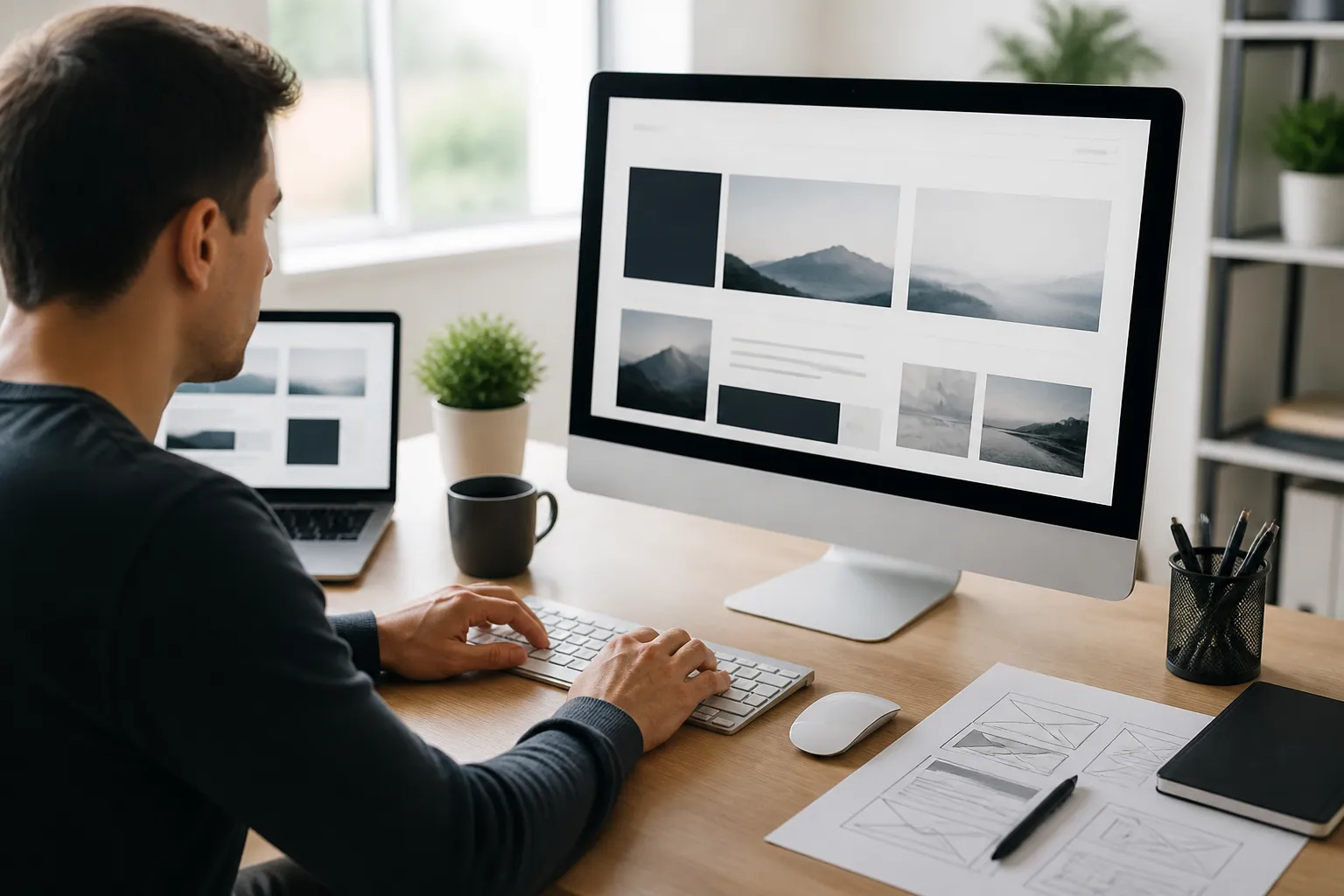
Pages are built with scannable headings, concise sections, descriptive calls to action, and suitable media. Text is arranged for people who read quickly on screens, including visitors using mobile devices. Where appropriate, galleries, testimonials, pricing tables, forms, maps, downloads, and case studies can strengthen the experience.
A flexible content structure also supports future growth. New services, articles, landing pages, and campaigns can be added without rebuilding the entire website.
Performance, Security, and Search Readiness
Responsive and Accessible Experience
A website must work well on phones, tablets, laptops, and large screens. Responsive layout techniques allow content to resize and reorganize according to the available space. Navigation, buttons, forms, images, and tables should remain usable without awkward zooming or horizontal scrolling.
Accessibility benefits every visitor, not only people with permanent disabilities. Clear headings, sufficient color contrast, keyboard-friendly controls, useful alternative text, readable typography, and descriptive links improve the experience for people using assistive technology, temporary injuries, changing environments, or slower connections.
An inclusive website demonstrates professionalism and expands your potential audience. It also encourages clearer communication because accessible practices often improve usability for everyone.
Speed and Technical Performance
Slow websites lose attention. Visitors expect pages to respond quickly, and search engines consider performance when evaluating user experience. Speed depends on several factors, including hosting quality, theme construction, image dimensions, scripts, plugins, caching, and database health.
The setup process can include image compression, modern file formats, sensible font usage, caching configuration, and removal of unnecessary features. Performance should be tested on realistic devices and connections rather than judged only from a fast office computer.
Speed is not merely a technical goal. Faster pages reduce frustration, support mobile users, and increase the likelihood that visitors will explore additional pages or complete a form.
Essential Security Measures
No website should treat security as an afterthought. Basic protection includes strong, unique passwords, limited administrator access, current WordPress core files, updated themes and plugins, secure hosting, and regular backups. Additional measures may include login protection, malware monitoring, firewall configuration, secure transport encryption, and activity oversight.
The aim is not to create fear, but to establish sensible habits and layers of protection. A backup is especially valuable because it provides a recovery option when an update fails, a file is damaged, or unauthorized activity occurs. Security also protects customer trust, which can be difficult to rebuild after a preventable incident.
Search Engine Foundations
Search engine optimization begins with useful content and clear structure. Proper page titles, headings, readable URLs, descriptive metadata, internal links, image alternative text, mobile compatibility, and fast loading provide a strong foundation.
A well-organized website makes it easier for search engines to understand your subjects and easier for visitors to find relevant information. It is important to avoid exaggerated promises: no setup can guarantee immediate rankings. However, a technically sound and genuinely helpful website gives future marketing efforts a stronger platform.
Features That Support Growth
WordPress can begin with a focused set of features and expand as your needs become clearer. Common options include contact forms, newsletter subscriptions, appointment calendars, social profiles, testimonials, downloadable resources, analytics, payment gateways, product management, event listings, and customer relationship integrations.
The best feature set is not the largest one. Each addition should solve a defined problem or improve a measurable part of the visitor journey. Too many plugins can create conflicts, slow pages, increase maintenance requirements, and make troubleshooting harder. Careful selection protects simplicity and reliability.
A scalable website also separates essential content from temporary campaigns. Permanent navigation should remain stable, while seasonal offers and promotional pages can be added without confusing the main structure. This balance helps visitors understand your business today while leaving room for tomorrow’s opportunities.
A Clear Website Building Process
Step One: Define the Goal
The first step is agreeing on the website’s main purpose. A local service provider may prioritize phone calls and quotation requests. A nonprofit may focus on donations and volunteer registration. A retailer may need product discovery and secure checkout. Defining the primary outcome keeps later decisions focused.

Step Two: Organize the Information
Next, content is grouped into pages and sections. Navigation should reflect the language visitors use, not internal company jargon. Important information should be accessible within a small number of logical steps. This stage may reveal missing content, outdated claims, or opportunities to answer common questions.
Step Three: Establish the Visual Direction
Design choices are then aligned with your identity and audience. Colors, typefaces, imagery, spacing, and interface components are selected to create a recognizable and consistent experience. At this point, attention is given to readability and conversion, not just visual preference.
Step Four: Build and Test
The website is assembled in WordPress, populated with content, and tested across browsers and screen sizes. Links, forms, menus, buttons, media, and integrations are checked. Testing should include realistic user journeys, such as finding a service, submitting an inquiry, reading an article, or completing a purchase.
Step Five: Launch and Improve
Before launch, backups, security settings, analytics, indexing preferences, and legal information are reviewed. After launch, performance and visitor behavior can be monitored. Improvements should be based on evidence, feedback, and changing business priorities rather than guesswork.
Why Professional Setup Matters
WordPress is accessible, but accessibility does not eliminate complexity. Themes, plugins, hosting settings, responsive layouts, redirects, permissions, backups, and content workflows can interact in unexpected ways. A rushed setup may produce a website that looks acceptable in one browser but becomes difficult to update or unreliable under real use.
Professional guidance saves time by addressing structure before decoration and requirements before installation. It also helps avoid common mistakes, such as using oversized images, installing redundant plugins, hiding important contact details, neglecting mobile layouts, or publishing thin content.
The value extends beyond launch. A thoughtfully built website gives your team confidence to make ordinary updates. When editing is intuitive and the structure is documented, you are less dependent on technical assistance for every small change. That independence can reduce costs and help you respond faster to market opportunities.
FAQ
Is WordPress suitable for a small business?
Yes. WordPress can support a simple service website, a growing content program, or a sophisticated commercial platform. It allows you to begin with essential pages and add capabilities as your audience and budget develop. The key is choosing an appropriate theme, hosting environment, and feature set rather than installing everything at once.
Do I need to provide all the content?
You should provide accurate business information, service details, brand assets, legal statements, and any required photography. Support can include organizing, formatting, refining, or identifying content gaps. Strong collaboration produces the most credible result because your knowledge supplies the substance while professional structure makes it easier to understand.
Can I update the website myself?
Yes. WordPress is built for content management. After setup, authorized users can edit text, upload images, publish articles, manage products, and review form submissions. Training or written guidance can help your team work safely and maintain consistent formatting.
Will the website work on mobile devices?
A properly built website is designed and tested for responsive behavior. Layouts, menus, forms, images, and buttons should adapt to different screen sizes. Testing is important because mobile usability depends on real content, not only on the appearance of an empty template.
How long does building a website take?
The timeline depends on scope, content readiness, design complexity, revisions, integrations, and approvals. A focused informational website may progress quickly, while a store or membership platform requires more planning and testing. Providing organized materials and timely feedback helps keep the project moving.
Can you add online payments or booking?
WordPress supports many payment, commerce, and scheduling solutions. The appropriate choice depends on your location, transaction requirements, availability rules, taxes, notifications, and customer experience. These features should be tested carefully before launch so that visitors can complete important actions confidently.
Does setup guarantee search engine rankings?
No ethical provider can guarantee specific rankings. Search visibility depends on competition, content quality, authority, technical performance, location, and ongoing work. A strong setup establishes sound fundamentals, but continued publishing, promotion, measurement, and improvement are normally required.
What maintenance will be needed afterward?
Maintenance commonly includes updates, backups, security checks, performance reviews, broken-link checks, content revisions, and analytics monitoring. A maintenance routine reduces risk and keeps the website aligned with business changes. Infrequent but consistent care is generally better than emergency repairs after neglect.
Can an existing website be rebuilt?
Yes. A rebuild can preserve valuable content while improving structure, design, mobile usability, speed, and security. Before changing anything, existing URLs, rankings, analytics, and customer journeys should be reviewed. Proper redirects and backups help protect continuity during the transition.
What makes a website persuasive?
Persuasion comes from relevance, clarity, proof, and a low-friction next step. Visitors should quickly understand the problem you solve, the benefits you offer, and why they should trust you. Testimonials, examples, transparent details, helpful answers, and clear calls to action can support confidence without relying on exaggerated claims.
Conclusion
WordPress Setup & Website Building offers a practical way to turn an idea, organization, or business into a credible digital experience. By combining planning, professional design, organized content, responsive development, performance preparation, security, and search-friendly foundations, it creates more than a presentable website. It creates a useful platform for communication, growth, and customer action.
The strongest results come from treating the website as an ongoing business tool. Begin with clear goals, choose features intentionally, make the experience accessible, protect the system, and use visitor feedback to guide improvements. With a reliable foundation and a manageable publishing process, your website can remain valuable long after launch.
If your current website feels confusing, outdated, slow, or difficult to maintain, a structured WordPress build can provide a confident next step. A carefully developed online presence helps people find you, understand your value, trust your organization, and act. That combination makes the investment worthwhile and gives your future marketing efforts a stronger place to grow.