WordPress Tutorials for Beginners: Build Your First Site

WordPress Tutorials For Beginners: Start Here: What WordPress Can Do
WordPress is a flexible publishing system for building blogs, portfolios, business websites, online stores, membership areas, and community projects. For beginners, its greatest advantage is control: you can start with a modest site, learn gradually, and add capabilities when your needs become clearer. You do not need to understand programming before publishing a useful website. You do need a sensible plan, reliable tools, and the patience to make decisions in the right order.
This tutorial explains the complete beginner journey, from choosing a website address to maintaining a secure, readable, and persuasive site. It distinguishes WordPress.com from self hosted WordPress, explains themes and plugins, and provides practical steps for creating your first pages and posts. By following the sequence, you can avoid common confusion and build a foundation that remains useful as your confidence grows.
Choose the Right WordPress Option
WordPress.com or self hosted WordPress?
WordPress.com is a hosted service. The provider manages server infrastructure, much of the technical maintenance, and several available features. It can be a convenient starting point when you want to publish quickly without comparing hosting companies. Your plan determines storage, customization, monetization, and other capabilities, so read current terms carefully before committing.
Self hosted WordPress uses the open source WordPress software installed on hosting that you select. This option normally provides broader control over themes, plugins, code, backups, and site settings. It also gives you more responsibility. You must choose suitable hosting, keep software updated, protect administrator accounts, and monitor performance.
Neither option is automatically best. Choose hosted WordPress when simplicity and managed infrastructure are your priorities. Choose self hosted WordPress when ownership, flexibility, integrations, or long term customization matter most. Ask yourself three questions: How technical do I want to become? Which features will I need later? How much maintenance am I willing to perform? Your answers should guide the decision rather than a promotional feature list.
Select a domain and hosting
A domain is your website’s public address. Pick a name that is easy to pronounce, type, remember, and associate with your purpose. Avoid unnecessary hyphens, confusing spelling, and names that could restrict future growth. Confirm that the name is available and does not conflict with an existing brand or legal right.
Hosting stores your website’s files and database. Compare providers by support quality, backup arrangements, security tools, renewal pricing, resource limits, and the ease of restoring a site. Extremely low introductory prices may increase later, so examine the full terms. A beginner friendly host should offer a clear control panel, automatic updates where appropriate, and straightforward instructions for connecting your domain.
After purchasing hosting, follow its WordPress installation process. You may receive a temporary address while domain settings update. Do not worry if the site does not appear immediately; changes can take time to spread. Use a strong administrator username and unique password from the beginning, and save recovery information somewhere safe.
Configure Your First Site
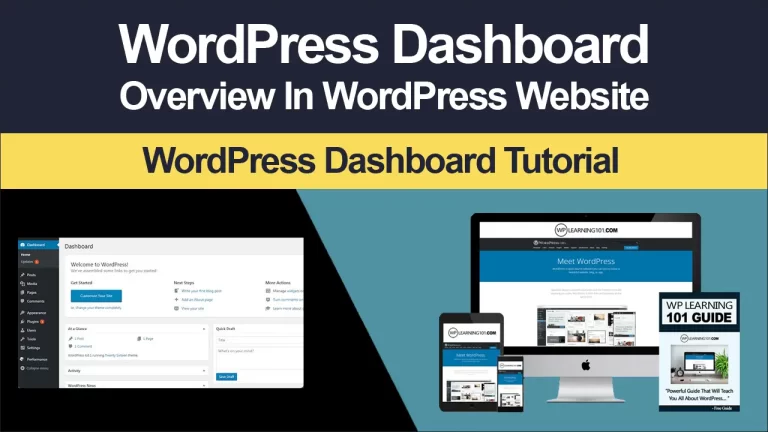
Log into the WordPress dashboard, the administrative area where you manage content and settings. Begin with Settings, then review the site title, tagline, language, timezone, date format, and membership option. Write a concise title that explains the site. A tagline can clarify the audience or benefit, but leaving it blank may be better than using a vague slogan.
Set the correct site address and confirm whether visitors should see a secure address beginning with HTTPS. Most reputable hosting plans provide an SSL certificate. If browsers show security warnings, contact the host before inviting visitors. Security warnings damage confidence and can prevent forms or payments from working properly.

Choose a readable permalink structure. A structure using the post name usually creates clean addresses, although the best choice depends on your publishing plan. Change it before publishing many pages, because later changes can create broken links. Keep addresses short, descriptive, and stable.
Delete sample content, unused themes, and unnecessary plugins. Every additional component creates another item to understand and maintain. Install only what serves a clear purpose. Create a regular administrator account for daily work rather than using the highest privilege account for every task, especially if other people will help manage the site.
Design with a Theme
A theme controls the visual structure of your website, including typography, colors, layouts, menus, and template behavior. Begin with a lightweight, actively maintained theme that supports the current WordPress editor. Look for readable demonstrations rather than judging a theme solely by decorative screenshots. A beautiful demo can become difficult when it depends on many add ons or specialized content.
Before choosing, test the theme on a phone and desktop. Check heading sizes, contrast, navigation, buttons, forms, archives, and image display. Make sure visitors can recognize what to do next. Consistent spacing and clear text generally persuade more effectively than crowded visual effects.
Use the Site Editor or Customizer, depending on your theme. Establish a small design system: one body font, one heading style, a limited color palette, and consistent button treatment. Avoid changing every element independently. Repeated patterns make a site feel intentional and reduce future editing time.
Create a primary menu containing only important destinations. A typical service site might include Home, About, Services, Resources, and Contact. A blog may add Categories or Archive. Keep labels familiar. “Learn” is often less precise than “Tutorials,” and “Solutions” may be less immediately understandable than “Services.”
Build Essential Pages
Write a useful homepage
Your homepage should answer three questions quickly: What is this site about? Who is it for? What should the visitor do next? Place a clear headline near the top, followed by a short explanation of the problem you solve or the experience you provide. Add a focused button, such as “Book a consultation,” “Read the guide,” or “View the collection.”
Continue with evidence and context. Explain your main benefits, show representative work, identify your process, and address a relevant concern. Finish with a clear next step. Do not attempt to tell every story on one page; link to deeper information instead.
Add About and Contact pages
An About page should connect your background to the visitor’s needs. Explain why the project exists, what standards guide it, and what people can expect. Personal details are useful when they establish credibility or clarify values, but avoid a long autobiography without relevance.
A Contact page should make communication easy. Include an email address, form, business hours, location if relevant, and expected response guidance. Keep the form short. Request only information needed to respond. Test every field, confirmation message, and notification before publishing.
Understand pages and posts
Use pages for relatively permanent information, such as About, Contact, Services, Privacy, and Terms. Use posts for dated or regularly published material, such as tutorials, news, opinions, and announcements. Posts can be organized with categories and tags, while pages commonly use menus and parent-child relationships.
Write one clear purpose per page. Break long text with descriptive headings, short paragraphs, lists, examples, and meaningful links. Avoid placing important information only inside images. Text remains easier for visitors, search tools, and assistive technologies to interpret.
Publish Your First Post
Open Posts and select Add New. Start with a specific topic that answers a real beginner question. Draft a useful title rather than a clever one. For example, “How to Create a WordPress Contact Page” communicates more than “Let’s Get Connected.”
Outline before writing. State the problem, explain the method, demonstrate the result, and mention mistakes to avoid. Use the block editor to add headings, paragraphs, images, lists, quotations, buttons, and separators. Choose blocks for meaning, not decoration. A heading should introduce a section; a button should lead to an intentional action.
Add a featured image only when it supports the subject. Resize large images before uploading, use an informative filename, and write alternative text that describes the image’s purpose. If the image is decorative, an empty alternative text value may be appropriate. Never copy an image without checking its license or permission.
Preview the post on multiple screen sizes. Check links, spelling, headings, image crops, button behavior, and spacing. Assign a relevant category, choose a limited number of useful tags, and publish only when the article genuinely helps the intended reader. Later, update the post when instructions, screenshots, or linked resources change.
Add Plugins Carefully
Plugins extend WordPress with functions such as forms, backups, accessibility improvements, analytics, ecommerce, caching, and spam protection. They are powerful, but installing many plugins without a plan can create conflicts, clutter, security exposure, or slower administration.
Before installing one, define the problem in a sentence. Read its documentation, update history, compatibility notes, support activity, privacy implications, and pricing. Check whether your theme or host already provides the function. Avoid overlapping plugins that perform the same job.
Install from a trusted source, activate one new plugin at a time, and test key pages afterward. Keep a simple record of what each plugin does. If you deactivate or remove a plugin, check whether it leaves settings or files behind. Do not remove a tool that controls important content until you understand its consequences.
Improve Security and Reliability
Security begins with routine behavior. Use unique passwords, enable multifactor authentication when available, limit administrator access, and avoid sharing accounts. Keep WordPress core, themes, and plugins updated, but review important changes on a staging site or after creating a reliable backup.
Backups should include both website files and the database. A backup is valuable only if it can be restored. Test restoration occasionally, store copies away from the website, and understand how long your provider retains them. For a business site, document who can restore it and what steps they should follow.
Use a security plugin or hosting feature only after understanding its settings. Excessive restrictions can block legitimate visitors or administrators. Monitor failed login notices, unfamiliar users, unexpected redirects, altered content, and sudden performance changes. If an intrusion occurs, avoid repeatedly guessing. Contact your host or a qualified security professional, preserve evidence, and change credentials from a clean device.
Privacy also deserves deliberate attention. Explain how forms, analytics, cookies, payments, and newsletters use personal information. Display the notices and consent choices required in the locations where you operate and where your visitors live. Obtain professional legal guidance when your activities are complex.
Make the Site Accessible and Fast
Accessibility improves the experience for people using keyboards, screen readers, magnification, captions, or alternative input devices. Use logical heading order, sufficient color contrast, visible focus indicators, descriptive link text, labels for forms, captions for meaningful video, and alternative text for informative images. Do not rely on color alone to communicate status.
Performance starts with efficient hosting and sensible design. Compress images, select appropriate dimensions, limit animated effects, remove unused plugins, and avoid loading large assets on pages that do not need them. Test from a phone and a slower connection, not only from your own computer.
A fast site is not merely a technical achievement. It reduces frustration, helps visitors reach information, and supports completed actions. Review pages with real content, because placeholder text and empty demonstrations can hide practical problems.
Support Discoverability
Search visibility begins with usefulness, not a collection of repeated phrases. Identify the questions your audience asks and create pages that answer them clearly. Use descriptive titles, logical headings, readable addresses, internal links, and accurate summaries. Write for visitors first.
Connect related content with contextual links. A tutorial about contact pages might link to a privacy explanation, form testing checklist, and accessibility guide. This helps visitors continue learning and helps you identify gaps in your content.
Submit your site to relevant search services when appropriate, verify ownership through their recommended methods, and monitor indexing issues. Do not assume every page should appear publicly. Private account pages, duplicate archives, and thin utility pages may need different handling. Results take time, so improve content consistently instead of chasing instant guarantees.
Measure and Improve
Connect an analytics tool only after deciding what questions it should answer. Useful questions include which pages attract attention, where visitors leave, which links receive engagement, and whether important forms complete successfully. Collect less data when less is sufficient, and respect applicable privacy requirements.
Review performance monthly. Identify one strong page to expand, one weak page to clarify, and one broken experience to repair. Read search queries, support messages, and direct feedback for language that visitors naturally use. These sources can guide future titles and explanations without encouraging awkward repetition.
Use experiments carefully. Change one significant element at a time, define success beforehand, and allow enough activity for a meaningful comparison. A louder button is not automatically better if it damages trust. Clarity, relevance, and credibility should remain the central measures.
Common Beginner Mistakes
Many new site owners begin design before defining the audience. This leads to attractive pages that say little. Write a basic audience statement first: “This site helps [specific people] achieve [specific outcome] through [specific offer or resource].” Use it to filter features and wording.
Another mistake is treating a theme as a complete strategy. A theme supplies structure, not positioning, evidence, or useful content. Replace demo text, remove unnecessary sections, and explain your actual offer.
Some owners publish once and disappear. A website becomes more valuable when information remains accurate. Schedule maintenance for updates, backups, link checks, security reviews, and content refreshes. Keep a change log so you know what happened before a problem appeared.
Others install plugins to avoid learning basic editor features. Explore WordPress’s built-in blocks first. Fewer dependencies usually mean fewer conflicts and a clearer workflow.
A Practical Launch Checklist
Before launch, confirm that the domain works, HTTPS is active, and the site title is correct. Review every menu item and link. Test forms, email notifications, buttons, search, comments if enabled, and mobile layouts. Remove placeholder content and sample accounts.
Check that each page has a clear purpose, readable headings, descriptive links, and suitable metadata. Compress large images and inspect alternative text. Publish privacy, cookie, or legal information appropriate to your situation. Create a current backup and record your hosting, domain, and administrator recovery details.
Ask another person to complete one realistic task without your assistance. Observe where they hesitate. Their confusion often reveals problems you cannot see because you already know the site. Fix the most important obstacle before promoting the website widely.
Frequently Asked Questions
Is WordPress difficult for complete beginners?
The basic workflow is approachable: create content, arrange blocks, preview, and publish. More advanced tasks, such as migrations, custom code, and incident recovery, require additional learning. Begin with a small site and use documentation rather than changing unfamiliar settings randomly.
Do I need coding skills?
No. You can create a capable website using a theme, blocks, and carefully selected plugins. Coding becomes useful when you need custom behavior or precise design changes. Learning basic HTML and CSS can improve your understanding, but it is not a prerequisite for publishing.
How many plugins should I install?
There is no universal safe number. Install the fewest reliable plugins that solve clearly defined needs. Quality, maintenance, compatibility, and configuration matter more than a simple count. Remove unused tools and test after updates.
Should I use a free theme?
A free theme can be an excellent starting point if it is maintained, accessible, responsive, and documented. Evaluate its support and update history. Paid themes may include support or advanced features, but payment alone does not guarantee quality.
How often should I update WordPress?
Review updates regularly and apply security fixes promptly, while preserving a tested backup. For major changes, check compatibility and test important workflows. If you lack time to maintain the site, consider managed hosting or professional assistance.
What should I do if my site breaks?
Stay calm and identify the last change, such as an update, setting, or new plugin. Restore a known good backup when appropriate, or use a staging environment to isolate the issue. Contact your host with specific details, timestamps, and error messages rather than repeatedly changing unrelated settings.
Conclusion
Building your first WordPress site is not one dramatic technical task; it is a sequence of manageable decisions. Choose the platform that matches your control and maintenance preferences. Select a memorable domain and dependable host. Configure essential settings, use a clear theme, publish focused pages, and add plugins only when their purpose is understood.
Then protect the result with backups, updates, strong access controls, privacy awareness, accessibility practices, and performance checks. Measure real visitor needs instead of chasing decorative features. Most importantly, launch a useful first version and improve it through observation. A simple, trustworthy website that answers questions clearly will usually serve you better than an impressive but confusing collection of features.
WordPress rewards steady learning. Start with one audience, one clear goal, and one helpful action you want visitors to take. With that foundation, every tutorial, update, and refinement becomes easier to evaluate, and your website can grow without losing its purpose.