
WordPress SEO Guide: Boost Rankings and Organic Traffic

WordPress SEO: Build a Stronger Search Presence
WordPress SEO is the practice of improving a WordPress website so search engines can discover, understand, trust, and recommend its pages. It combines technical configuration, useful content, thoughtful site structure, reliable performance, and ongoing measurement. Although WordPress provides a strong foundation, publishing a website alone does not guarantee visibility. Search engines must still interpret your topics, evaluate your experience, and decide whether your pages deserve prominent placement.
A well planned SEO strategy turns WordPress into a durable marketing asset. It can attract visitors without paying for every click, support brand credibility, and create a steady stream of qualified leads, subscribers, or customers. The most effective approach is not a collection of shortcuts. It is a practical system that aligns audience needs with clear information and an accessible website.
Whether you manage a blog, online store, service company, membership site, or publication, the fundamentals remain similar. Start with research, establish a logical structure, improve technical quality, publish genuinely helpful pages, and use evidence to refine your decisions. This guide explains how to do that with WordPress.
What WordPress SEO Includes
WordPress SEO covers several connected areas. On page optimization improves titles, headings, text, links, images, and metadata. Technical SEO helps crawlers access and interpret the site. Off page SEO builds authority through mentions and links from reputable websites. Local SEO improves visibility for searches involving a business location. Ecommerce SEO organizes products, categories, filters, reviews, and buying information.
These areas should support one another. Excellent articles cannot perform consistently if pages load poorly or remain blocked from crawling. A technically perfect website may still attract little attention if its content does not answer meaningful questions. The goal is therefore balance: make pages useful to people and understandable to search systems.
WordPress makes many tasks manageable through its editor, themes, menus, media library, and plugins. However, convenience can also create risks. Excessive plugins may slow a site, poorly configured templates may generate duplicate pages, and automatic settings may produce incomplete metadata. Treat every feature as a tool that requires a clear purpose.
Define Business and Audience Goals
Before changing settings, identify the outcomes SEO should produce. A local consultant may want appointment requests, while a publisher may prioritize returning readers. An online shop may focus on profitable product searches rather than maximum traffic. Write down your audience, important offerings, geographic focus, and conversion actions.
Then describe the questions customers ask before choosing you. These questions can become article topics, service pages, comparison guides, tutorials, or frequently asked questions. Connecting searches to business value prevents a common mistake: producing large amounts of traffic that never becomes meaningful engagement.
Keyword and Topic Research
Keyword research reveals the language people use when seeking information, products, or services. It should not be treated as a hunt for isolated phrases. Modern optimization works better when you understand the underlying topic, search intent, related concepts, and expected format.
Begin with phrases that describe your main offer. Expand them with problems, locations, audiences, features, alternatives, and questions. Review search results to learn what users appear to want. A result page dominated by tutorials suggests informational intent. Product listings and shopping features suggest commercial intent. Local packs indicate that location and business details matter.

Group related phrases into topic clusters. Assign one primary subject to each important page, then use supporting pages to answer narrower questions. This prevents several pages from competing for exactly the same term. It also creates opportunities for internal links that guide readers through a logical learning or buying journey.
Choose topics according to relevance, usefulness, competition, and potential value. A highly searched phrase is not automatically the best opportunity. A specific question from a motivated buyer may produce fewer visits but more conversions. Prioritize pages that solve real problems and can demonstrate expertise through original explanation, evidence, examples, or experience.
Create Search Friendly Page Briefs
Before writing, prepare a brief containing the audience, intent, primary topic, related questions, recommended heading structure, desired action, and trustworthy sources. This gives writers direction without forcing unnatural keyword repetition. It also makes quality easier to review across a team.
WordPress Site Structure
A clear structure helps visitors and crawlers understand relationships between pages. Organize content into sensible categories, use descriptive navigation labels, and keep important pages close to the homepage through menus or contextual links. Avoid vague labels such as “Stuff” or “More.” Specific labels communicate value immediately.
Use a consistent URL format. Short, readable addresses are usually easier to share and understand than long strings containing dates, unnecessary numbers, or session details. Choose a structure before publishing extensively, because changing URLs later requires redirects and careful monitoring.
Categories should represent broad, stable subjects. Tags can describe narrower characteristics, but they are not mandatory. Creating dozens of thin tag archives often adds little value and may produce duplicate or low quality pages. If an archive does not help users browse, consider disabling its indexing or removing it.
Internal linking is one of the most practical WordPress SEO techniques. Link from established pages to important new pages using descriptive anchor text. Connect introductory content to detailed guides, and link guides to relevant services or products. Regularly inspect older articles so valuable pages do not become isolated.
On Page Optimization
Each indexable page should have a distinct title that accurately describes its content. Put the central topic near the beginning when natural, but prioritize clarity over formulaic placement. A strong title promises a specific benefit or answer without exaggeration.
Write a useful meta description that summarizes the page and encourages a qualified click. Search engines may rewrite it, so treat it as persuasive supporting text rather than a guaranteed display. Avoid repeating the same description across many pages.

Use one clear main heading, followed by organized subheadings. Headings should reflect the page’s actual sections, not serve as decorative keyword containers. Present the most important answer early, then add context, instructions, examples, limitations, and next steps.
Content should be original, accurate, and complete enough for its purpose. Explain concepts in plain language, use examples where they reduce confusion, and update claims that may change. Add author information, references, editorial policies, or firsthand evidence when these details strengthen trust.
Images and Media
Optimize images before uploading them. Resize oversized files, select an efficient format, use meaningful filenames, and write concise alternative text when the image conveys information. Decorative images generally need empty alternative text so assistive technologies can ignore them. Do not place keywords in alt text unless they accurately describe the image.
Videos, charts, and downloadable resources can improve understanding, but they should support the page rather than distract from it. Provide surrounding text and accessible controls. If important information exists only inside a video or graphic, repeat it in text so users and search systems can access the substance.
Technical WordPress SEO
Technical work begins with crawlability and indexability. Confirm that search engines are not blocked by accidental privacy settings, robots directives, password protection, or noindex instructions. Check that the preferred version of each important page is accessible and returns a successful response.
Submit an XML sitemap through the relevant search platform. A sitemap is not a ranking signal, but it helps discovery and provides a useful inventory of URLs. Keep it clean by excluding drafts, irrelevant archives, duplicate pages, and thin results.
Use canonical signals carefully when similar URLs exist. Canonicals express a preferred version, but they do not replace sound architecture or redirects. Remove unnecessary parameters and avoid publishing multiple pages that differ only slightly.
Mobile usability is essential because most audiences browse on phones and search engines evaluate mobile experiences. Choose a responsive theme, make text readable, keep controls comfortably spaced, and ensure menus, forms, checkout, and media work on smaller screens.
Performance matters for both satisfaction and business results. Use dependable hosting, caching, compressed assets, efficient images, limited scripts, and a content delivery network when appropriate. Measure real page experience rather than assuming a high laboratory score means every visitor is comfortable.

Security is also part of quality. Maintain WordPress core, themes, and plugins, use strong authentication, enable backups, and install a trusted security process. A hacked website can lose rankings, damage customer confidence, and expose sensitive data.
Plugins and Configuration
An SEO plugin can simplify titles, descriptions, sitemaps, schema controls, redirects, and social sharing information. Select one reputable solution and learn its settings instead of installing several overlapping plugins. More features do not necessarily produce better optimization.
A plugin cannot compensate for weak content, slow hosting, poor design, or an unclear offer. Configure sensible defaults, review automated templates, and test important page types. After updates, check archives, structured data, canonical tags, and indexing behavior.
Structured data helps describe entities such as articles, products, organizations, events, recipes, and local businesses. Add markup only when the visible page supports it and the information is accurate. Never use schema to claim reviews, prices, or features that visitors cannot verify.
Local WordPress SEO
Local businesses should make their name, address, phone number, hours, services, and service areas consistent across the website and major business profiles. Create a genuinely useful location page rather than copying identical text for multiple towns. Explain local expertise, availability, directions, parking, and customer needs where relevant.
Encourage honest reviews and respond professionally. Reviews influence trust, though they should never be manipulated. Include location cues naturally in titles, headings, copy, image context, and internal links. A clear contact page and prominent conversion path make local visibility more valuable.
Ecommerce WordPress SEO
Online stores require useful category and product pages. Category pages should explain selection criteria and help shoppers compare options. Product pages need original descriptions, specifications, pricing, availability, shipping information, returns, images, and answers to common objections.
Prevent filters and sorting parameters from creating thousands of thin, crawlable URLs. Maintain accurate inventory signals and structured data. Connect related products and buying guides with internal links. Monitor discontinued products and provide relevant alternatives or helpful redirects instead of leaving visitors at dead ends.
Measuring and Improving Results
Connect the website to search performance and analytics tools. Track impressions, clicks, click through rate, indexed pages, queries, landing pages, engagement, conversions, revenue, and leads. Segment data by device, location, page type, and brand or nonbrand searches when useful.
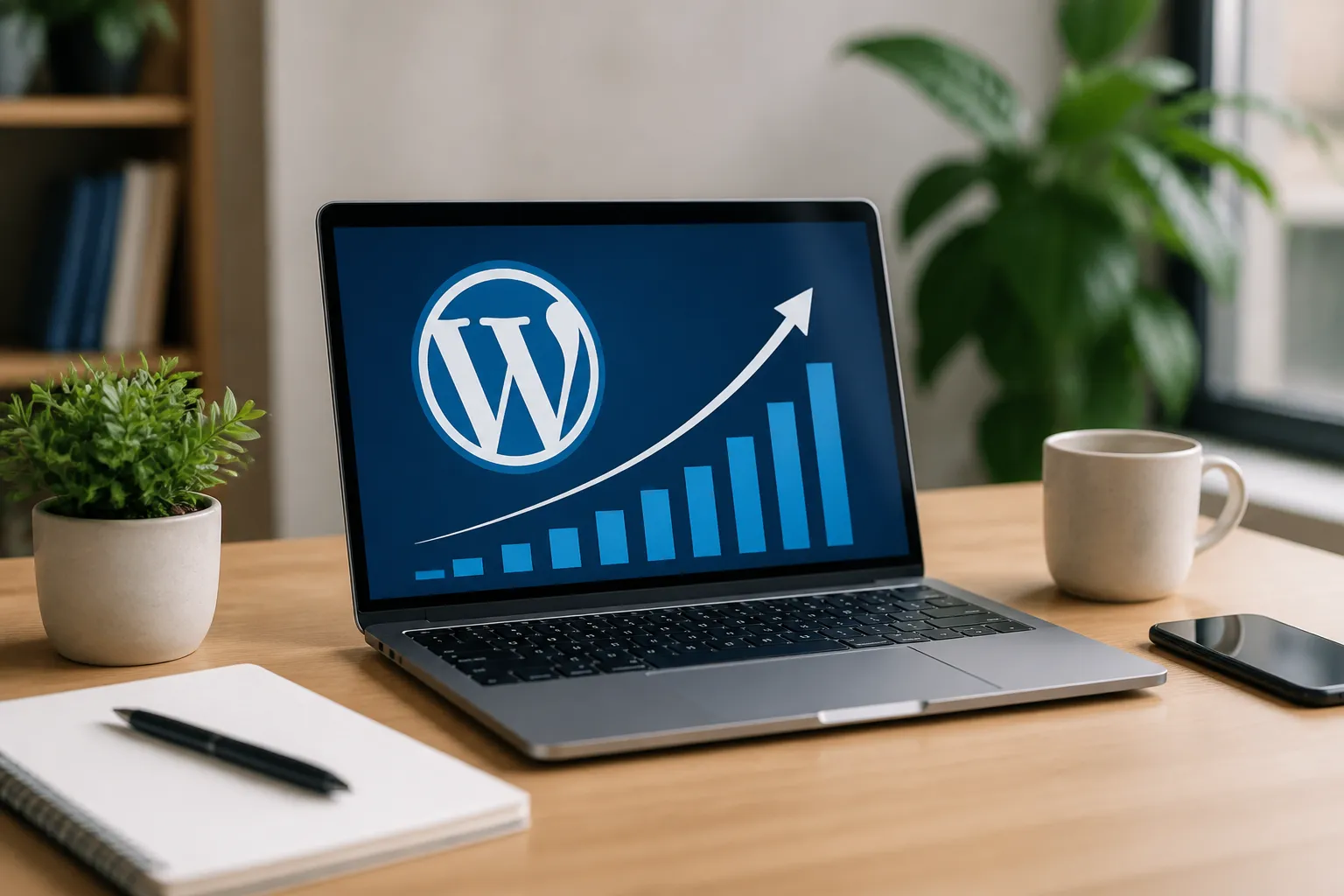
Do not judge success from rankings alone. A position can fluctuate while qualified traffic and conversions improve. Conversely, a ranking increase may have little commercial value. Establish baseline measurements, define realistic targets, and review trends over meaningful periods.
Audit the site regularly. Look for broken links, redirect chains, accidental noindex directives, duplicate titles, missing descriptions, outdated information, slow templates, and pages receiving impressions without clicks. Update strong content before creating endless new articles. Combine similar weak pages when one comprehensive resource would serve users better.
A Practical Publishing Workflow
Research the audience and intent. Create a brief. Draft for people, not algorithms. Edit for accuracy, clarity, accessibility, and persuasive structure. Add original examples, relevant links, optimized media, and a clear next action. Test the page on mobile, review metadata, publish, and request discovery when appropriate.
After publication, promote the resource through email, social channels, partnerships, communities, or sales conversations. Genuine promotion can attract readers, references, and links. Revisit performance after several weeks or months, then improve the opening, headings, evidence, internal links, or conversion path based on observed behavior.
Common Mistakes to Avoid
Keyword stuffing makes writing unpleasant and can weaken trust. Repeating a phrase excessively is not a substitute for covering a topic well. Targeting every variation with a separate page can create cannibalization and maintenance problems.
Publishing automatically generated or lightly rewritten material at scale often produces generic answers. Automation can assist research, outlines, accessibility checks, and editing, but human review must ensure originality, accuracy, usefulness, and appropriate expertise.
Ignoring existing content wastes resources. Older pages may already possess authority and useful backlinks. Refresh them when facts, products, regulations, or audience expectations change. Preserve successful URLs when possible, and use redirects when a move is necessary.
Another mistake is treating SEO as a one time project. Search behavior, competitors, technology, and business priorities evolve. Sustainable results come from a repeatable cycle of research, publishing, measurement, improvement, and technical care.
Frequently Asked Questions
Is WordPress good for SEO?
Yes. WordPress offers flexible templates, editable content, responsive themes, media management, menus, plugins, and integrations that support strong optimization. Results depend on configuration, hosting, content quality, accessibility, and ongoing maintenance rather than the platform alone.
Do I need an SEO plugin?
You can optimize many fundamentals without one, but a reputable plugin can make metadata, sitemaps, redirects, and structured settings easier to manage. Use one carefully, keep it updated, and understand what it changes. Avoid installing multiple plugins that perform the same functions.
How long does WordPress SEO take?
Technical improvements may produce noticeable changes quickly, while new content often needs weeks or months to earn visibility. Competition, site history, authority, intent, and quality all affect timing. Consistent work usually outperforms occasional bursts of activity.
How many keywords should a page target?
Focus on one primary topic and its natural variations, while answering closely related questions. There is no ideal keyword density. Write comprehensively enough to satisfy the visitor, and use headings, examples, and links to clarify the subject.
Should every page be indexed?
No. Index important pages that provide unique value. Thin tag archives, internal search results, duplicate versions, private content, and temporary utility pages may not deserve indexing. Make these decisions deliberately, then verify technical settings.
Are backlinks still important?
Relevant, editorially earned links can reinforce authority and help discovery. Quality matters more than quantity. Create resources people want to cite, develop relationships ethically, and avoid paid or manipulative link schemes that can create serious risk.
How can I improve slow WordPress pages?
Measure first. Identify oversized images, unnecessary plugins, render blocking resources, weak hosting, inefficient themes, database issues, and excessive third party scripts. Apply targeted fixes, retest on mobile, and monitor real user experience after deployment.
Does blogging automatically improve rankings?
No. Blogging helps when articles address real audience needs, demonstrate knowledge, connect to valuable pages, and receive thoughtful promotion. Publishing frequent, shallow posts may increase maintenance without improving visibility or conversions.
What should a local business prioritize?
Start with a complete business profile, consistent contact details, useful service and location pages, mobile usability, reviews, clear calls to action, and accurate local structured data. Then publish answers to questions customers ask before contacting you.
Can I change URLs after publishing?
You can, but unnecessary changes create broken links and lost signals. If a change is justified, map the old address to the closest relevant new page with a permanent redirect, update internal links, and monitor traffic and indexing afterward.
Conclusion
WordPress SEO is a practical growth system, not a mysterious technical trick. Build a structure that people can navigate, publish content that genuinely resolves their questions, make the site fast and accessible, and measure outcomes connected to your goals. Use plugins to simplify work, not to replace judgment. Protect the site, maintain its information, and improve pages according to evidence.
The strongest advantage comes from consistency. A single optimized page may help, but a maintained library of trustworthy resources can compound visibility, authority, and conversions over time. Begin with an audit, fix the most damaging obstacles, choose topics your audience values, and establish a realistic publishing and review schedule. With patient execution, WordPress can become a persuasive, discoverable, and dependable foundation for long term digital growth.